Towel Guide
Fouta Towels Explained: Linen Weaves for Beach, Bath, and Travel
A towel can be wonderfully plush—and still be the wrong companion for a crowded suitcase, a breezy beach day, or a bathroom where everything needs to dry quickly. Fouta towels offer another approach: flat woven, lightweight, and easy to fold, with a character shaped by their fiber and weave.
Published October 27, 2026
There is a particular pleasure in stepping out of the water and wrapping up in a thick, soft terry towel. There is also a particular pleasure in discovering that the towel in your bag takes up almost no room, shakes out easily, and dries without becoming a heavy, damp bundle. Foutas belong to that second kind of everyday magic.
Often made with linen or cotton, a fouta is a flat-woven towel rather than a loop-pile terry towel. That difference changes its feel, weight, texture, and drying routine. It may be a useful beach layer, a lightweight bath towel, a sauna wrap, or an extra textile for travel. But “versatile” does not mean every fouta performs exactly alike. Fiber, weave, size, finishing, and how you care for it all shape the experience.
Here is what to know before making room for one in your linen cupboard—or packing one for the next trip.
What is a fouta towel?
A fouta is generally a flat-woven textile associated with hammam and bath traditions across parts of the Mediterranean and North Africa. The name is used for a range of towels and wraps, so details vary by maker and region. Some are cotton, some linen, and others use blends. Their shared feature is typically a relatively flat construction, often finished with fringed ends, rather than the raised loops that give terry towels their familiar plush surface.
That flatter structure is the source of much of a fouta’s appeal. Folded, it occupies less space than many thick bath towels. Spread out, it can provide a generous surface for drying or lounging. A lightweight model can also be useful as a wrap or travel layer. The towel’s appearance is often part of its charm, too: stripes, textured bands, and subtle variations in yarn can lend it a relaxed, lived-in look.
The word “fouta,” however, does not guarantee a particular fiber, weight, origin, or level of absorbency. Check the fabric details and care label rather than relying on the name alone. A cotton fouta and a linen fouta can both be flat-woven, but they will not necessarily feel or behave in the same way.
Flat weave versus terry: the difference you can feel
Terry towels use loops that stand above the fabric’s base. Those loops create a soft, lofty surface with plenty of area to meet the skin and take up moisture. The result is the classic bath towel experience: cushioning, warmth, and a substantial hand. A thick terry towel can feel like a small luxury after a shower, though it usually needs more room in a wash load and may take longer to dry than a lighter, flatter towel.
A flat-woven fouta has a smoother profile. Its yarns form a comparatively level surface, which makes it lighter and easier to fold compactly. The hand can feel crisp or textured at first, depending on the fiber and finish, and may relax with use and laundering. It will not necessarily deliver the cloudlike sensation of deep terry. That is not a flaw; it is a different design priority.
Rather than asking which kind is universally better, consider what you want your towel to do. A plush bath sheet can be a comforting choice for a slow, warm routine at home. A flat-woven fouta can be the more practical companion when space, weight, or drying time matters. Plenty of households keep both: one for that enveloping post-shower feeling, another for the beach bag, gym locker, or guest shelf.
- Terry: raised loops, a cushioned feel, and a substantial profile.
- Flat woven: a smoother surface, a more compact fold, and a lighter feel.
- Either style: performance depends on its fiber, construction, size, and care.
Why choose linen?
Linen is made from flax fibers. In towels, it is valued for a distinctive natural texture, a breathable feel, and a look that tends to become more relaxed with use. Linen yarns can have small variations that are part of the material’s character, rather than evidence that every thread should look identical. A washed finish can soften the hand and give the fabric an easygoing drape from the start.
Linen foutas are often chosen for their balance of coverage and portability. They can feel airy rather than bulky, making them easy to carry between the bathroom, pool, beach, or suitcase. Linen also tends to release moisture and dry more readily than a dense, heavy textile under suitable conditions. Actual drying time still depends on the towel’s thickness, the room’s airflow, humidity, and how thoroughly it has been wrung or spun.
Absorbency needs a little nuance. Linen can take up moisture, but a flat-woven linen towel does not feel like a high-pile cotton towel. If you are accustomed to pressing yourself into a lofty terry surface, a fouta may seem less plush and may require a different drying motion. Pat or press the fabric against the skin, then hang it fully open so air can reach both sides.
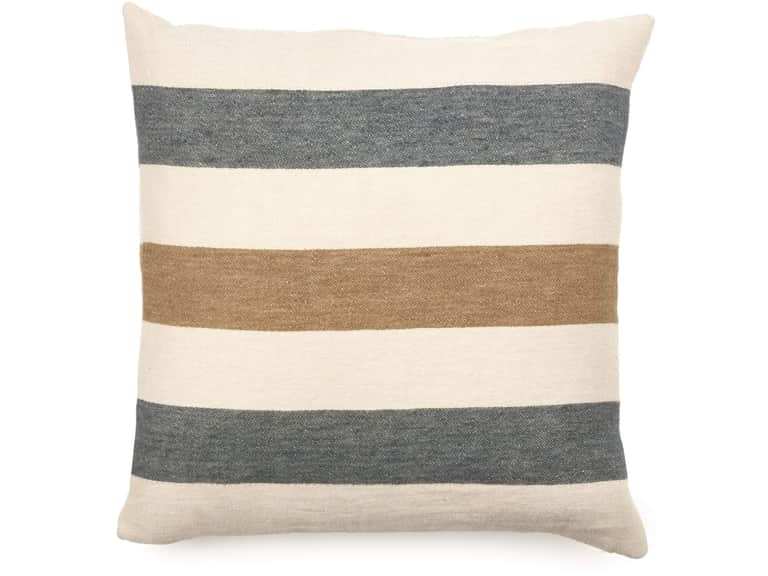
One example is The Belgian Towel Fouta Flax stripe, described as a 100% linen fouta with a washed finish. Its 43-by-71-inch dimensions offer broad coverage while retaining the practical character of a flat-woven towel. The product information recommends washing with similar colors, avoiding chlorine bleach, and line drying when possible—care that suits the goal of keeping linen in good condition over time.
The weave matters as much as the fiber
Fiber gets most of the attention, but the weave is what organizes those threads into a usable fabric. A fouta’s construction influences its surface, drape, thickness, and how it responds to repeated washing. Some linen foutas use a sateen weave, which can create a smoother surface and a subtle sheen. Others may have a more visibly textured structure. The precise result varies, so specifications are more helpful than assumptions based on a product name.
Weave also affects the balance between coverage and bulk. A lightweight, relatively open textile may be especially convenient in a travel bag, but it may not feel as substantial as a dense bath towel. A more substantial flat weave can offer a reassuring hand while still folding more neatly than many terry styles. The ideal choice depends on how you plan to use it.
Look at the stated dimensions as well. A towel around 43 by 71 inches can function as a generous wrap, beach layer, or multipurpose household textile for many adults. If you want a towel mainly for drying hair, a smaller size may be easier to handle. If you are tall, prefer a full-body wrap, or want a broad surface to lie on, generous dimensions may be worth the extra packing space.
Beach, bath, sauna, or suitcase?
At the beach, a flat-woven towel can be an appealing alternative to a bulky terry beach towel. It folds compactly, can serve as a lounging layer, and is easy to shake out after a day on the sand. Shake it outdoors before bringing it inside, then hang it open to dry. Sand can collect around hems or fringe, so a quick check before washing may help keep grit out of the machine.
In the bathroom, a fouta may suit someone who likes a lightweight feel and has a place to hang it fully open. A crowded towel rail or humid, poorly ventilated room can slow drying for any textile, however. The towel’s compactness does not remove the need for good airflow. If you want a very plush, enveloping towel, terry may be the more satisfying everyday choice; if you prefer a lighter hand and easy storage, a fouta may fit your routine.
For sauna or spa use, the broad, light format can work as a wrap or as a layer between you and a bench, where permitted by the facility. Follow the venue’s rules and hygiene guidance. A personal towel should be hung open after use, not left folded damp in a bag.
On the road, a fouta earns its reputation for adaptability. A flat fold can leave more room in a carry-on or weekend bag, and one textile can serve more than one purpose: towel, light cover, or picnic layer. If you pack it while damp, separate it from dry clothing and air it as soon as you arrive. A breathable laundry bag is a better temporary solution than sealing a wet towel in plastic for hours.
How to wash a linen fouta
Good care begins with the manufacturer’s instructions. Linen products can vary in weave, finish, dye, and construction, so a single routine is not appropriate for every towel. For many linen foutas, gentle washing at a moderate temperature, a mild detergent, and room to move in the drum are sensible starting points—unless the care label says otherwise.
- Unfold the towel before washing. Letting it open up helps water and detergent move through the fabric.
- Wash with similar colors. This is especially useful for new or richly colored textiles.
- Do not overload the machine. A crowded drum can prevent effective rinsing and add unnecessary friction.
- Use mild detergent. Follow the stated dose; excess detergent can leave residue that affects the fabric’s feel.
- Avoid chlorine bleach. It can damage fibers or affect color. Use stain treatments only when suitable for the material and dye.
- Dry with care. Line drying is often preferred. If the care instructions allow a dryer, use the recommended setting and avoid overdrying.
Linen can crease, and that is part of its relaxed appearance. If you prefer a smoother finish, ironing while the fabric is slightly damp and using steam may help. Do not assume ironing is necessary for performance; many people simply shake the towel out after washing and hang it neatly.
Fringed ends deserve a little attention. Before laundering, check that the fringe is untangled and not caught around other items. A mesh laundry bag can offer extra protection for delicate construction, though it should not be so small that it compresses the towel. Take the textile out promptly when the cycle ends and spread it open to dry.
Softness, lint, and the first few washes
New textiles sometimes release loose fibers, and a washed linen finish does not mean the towel will have no lint at all. A little shedding may diminish with successive washes. Follow the item’s instructions, wash it separately if advised, and avoid trying to solve normal early lint by using excessive detergent or an overly hot cycle.
Fabric softener is another product to approach thoughtfully. Residue can build up on some towels and may change how the surface takes up water. If a towel seems less absorbent over time, review detergent dosing, rinse performance, and the care label before adding a softener. A clean, well-rinsed towel that dries fully between uses is often the simplest place to start.
With linen, softness may evolve gradually rather than appearing as instant plushness. Regular, appropriate laundering can help the fabric settle into a familiar hand. The aim is not to make a flat weave feel like terry; it is to maintain the qualities that make the flat weave useful in the first place.
Choosing a fouta that suits your routine
Before choosing a towel, picture where it will spend most of its time. A beach regular may prioritize generous dimensions, a design that makes it easy to identify in a busy setting, and a fabric that packs down neatly. For bathroom use, consider the hanging space available and whether a lighter surface is your preference. For travel, weight and fold size may matter more than a deeply cushioned feel.
- Check the fiber content. Confirm whether the towel is linen, cotton, or a blend.
- Read the construction details. Flat weave, terry, and different weave structures have distinct textures and drying needs.
- Compare measurements. The stated size helps you judge coverage, storage, and packing practicality.
- Review the care label. Temperature, drying method, and bleach guidance are not identical for every textile.
- Set expectations for feel. A lightweight, flat-woven towel will not mimic a deep-pile bath sheet.
- Consider the setting. Airflow and humidity can affect how quickly any towel dries.
It can also help to think in terms of a towel wardrobe rather than a single winner. A plush cotton towel may stay beside the shower, while a linen fouta waits in the travel drawer or beach bag. A compact guest towel, a quick-drying gym towel, and a cozy bath sheet each solve different small problems. Choosing by job is often more satisfying than expecting one style to do everything equally well.
A quiet connection to Belgian linen
Belgium is known internationally for linen production and textile expertise, and the Belgian Linen label is associated with linen woven in Belgium from European flax. For a towel buyer, provenance can add useful context, but it is still worth reading the specific product information carefully. A label or collection name should not replace details about fiber, weave, finish, and care.
The Belgian Towel Fouta Flax stripe is described as part of a Belgian Linen collection and made from 100% linen. Its understated stripe and washed finish are a reminder that a towel can be practical without looking purely utilitarian. The most important questions remain refreshingly everyday ones: Does the size work for you? Do you like the hand? Can you dry and care for it comfortably where you live?
The bottom line
Fouta towels bring a different kind of comfort to the linen cupboard. Their flat-woven construction makes them lighter and easier to fold than many traditional terry towels, while linen versions offer a breathable, textured feel suited to beach days, bath routines, spa visits, and travel. They are not automatically more absorbent, softer, or quicker drying than every alternative; those qualities depend on the fiber, weave, weight, finishing, and conditions around them.
Choose a fouta for what it does well: adaptable coverage, a compact fold, and an easygoing feel. Give it room in the wash, follow its care guidance, and hang it open after use. If what you crave most is a thick, cushioned wrap, keep a terry towel close. If you want a towel that slips into a bag without taking over, a linen fouta may be just the useful little upgrade your routine has been missing.